No viewing, no service? Five price list lines to check before you sign
For families skipping the viewing entirely, the container decision moves to the crematory's minimum, the rental insert fee, and what an immediate burial price does and does not include.
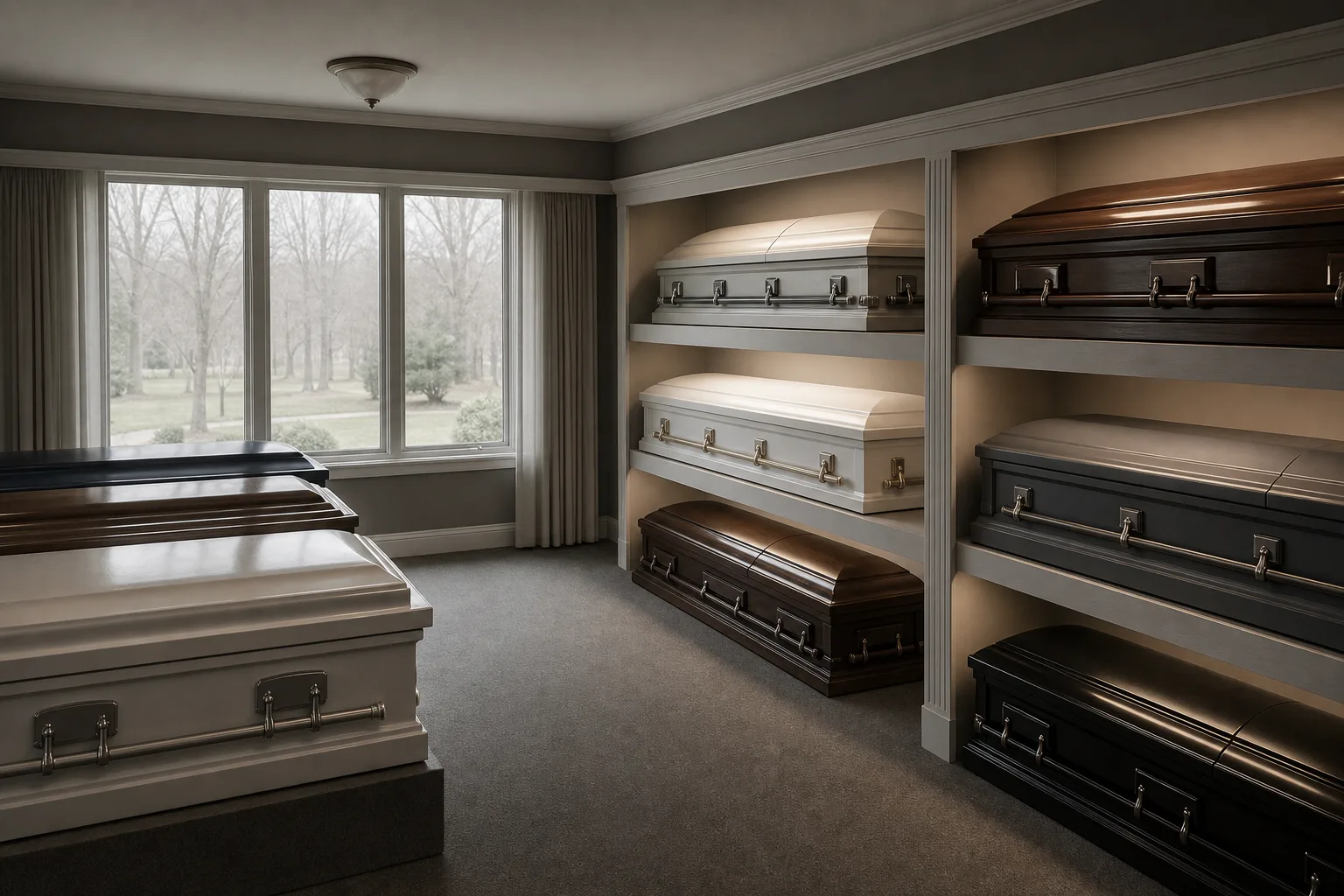
An alternative container is the entry-level option, usually heavy corrugated fiberboard on a plywood base or an unfinished softwood box. Funeral homes must offer one to families arranging a direct cremation.
A family that has decided against a viewing has already removed the single largest driver of casket spending, which is the expectation that a body will be presented to a room full of people. What remains is narrower and much easier to price, but it is not free, and the general price list still has several lines that apply. The Federal Trade Commission oversees how those lists are written and what a funeral provider must disclose before taking money. A careful reader works down the sheet in order, asking of each entry whether it is required, declinable, or simply assumed.
1. The minimum container the crematory will accept
Crematories do not accept a body without a container, and no state requires that container to be a casket. The general price list will carry an entry, usually called an alternative container or a minimum container, describing something rigid, combustible, and leakproof, most often heavy corrugated fiberboard with a plywood base, sometimes unfinished pine. It has handholds rather than hardware. Prices for this item vary widely between firms, so it is worth reading the description rather than the name, because two homes can use the same word for a cardboard tray and a finished softwood box.
2. What the cremation casket line is actually selling
Between the minimum container and a full casket sits a category built for families who want something more finished without paying for hardwood that will be consumed within the hour. These are typically all-wood or wood-composite boxes without metal hinges, gaskets, or sealing mechanisms, since anything that traps gas or leaves residue is unwelcome in a retort. A careful reader checks the construction note for the phrase describing metal content, and asks the funeral director directly whether the crematory imposes its own restrictions, because some do and the price list will not mention them.
3. How a rental casket and its insert are priced
Families who want a short viewing before cremation, or a casketed presence at a church service, can often rent. The arrangement is a hardwood or metal shell with a removable interior unit: a rigid cardboard or wood insert, fitted with a liner, that holds the body and is later removed intact and taken to the crematory. The shell is reused. What the reader should isolate on the price list is whether the quoted rental fee includes the insert or lists it separately, because those two numbers together are the real comparison against buying the least expensive casket outright.
4. What an immediate burial price does and does not fold in
Immediate burial, sometimes written as direct burial, means the body goes to the cemetery without embalming, without a viewing, and usually without a service at the funeral home. The price list must show it as a package, and it must show it three ways: with a casket the family supplies, with an alternative container, and with a specific casket the home sells. Read which version the quote used. The package covers the funeral home's work and the transfer, not the grave, not the opening and closing fee, and not any outer burial container the cemetery requires.
5. The lines that stay on the bill regardless
The basic services fee for the funeral director and staff is not declinable and appears whether there is a viewing, a service, or neither. Transfer of remains, refrigeration or shelter of remains charged by the day, the crematory fee itself, certified copies of the death certificate, and any permit filing all sit as separate entries. Cash advance items, meaning things the home buys on the family's behalf, must be identified as such. A reader who totals these before choosing a container knows what the container decision is actually moving, which is often a smaller share than expected.
The useful habit is to ask for the general price list on paper at the start, not a verbal estimate at the end, and then to write the chosen items down in a column and add them yourself. The statement of funeral goods and services selected, which the home must give before the arrangement is final, should match that column line for line. Where it does not, the difference is a question worth asking while the paperwork is still open.