Buying a casket? Three ways to get one, and what the rest of the bill won't change
The casket is the one line on a funeral bill with real spread, and three ordinary ways to fill it. The rest of the total mostly holds steady whichever you pick.
Also here
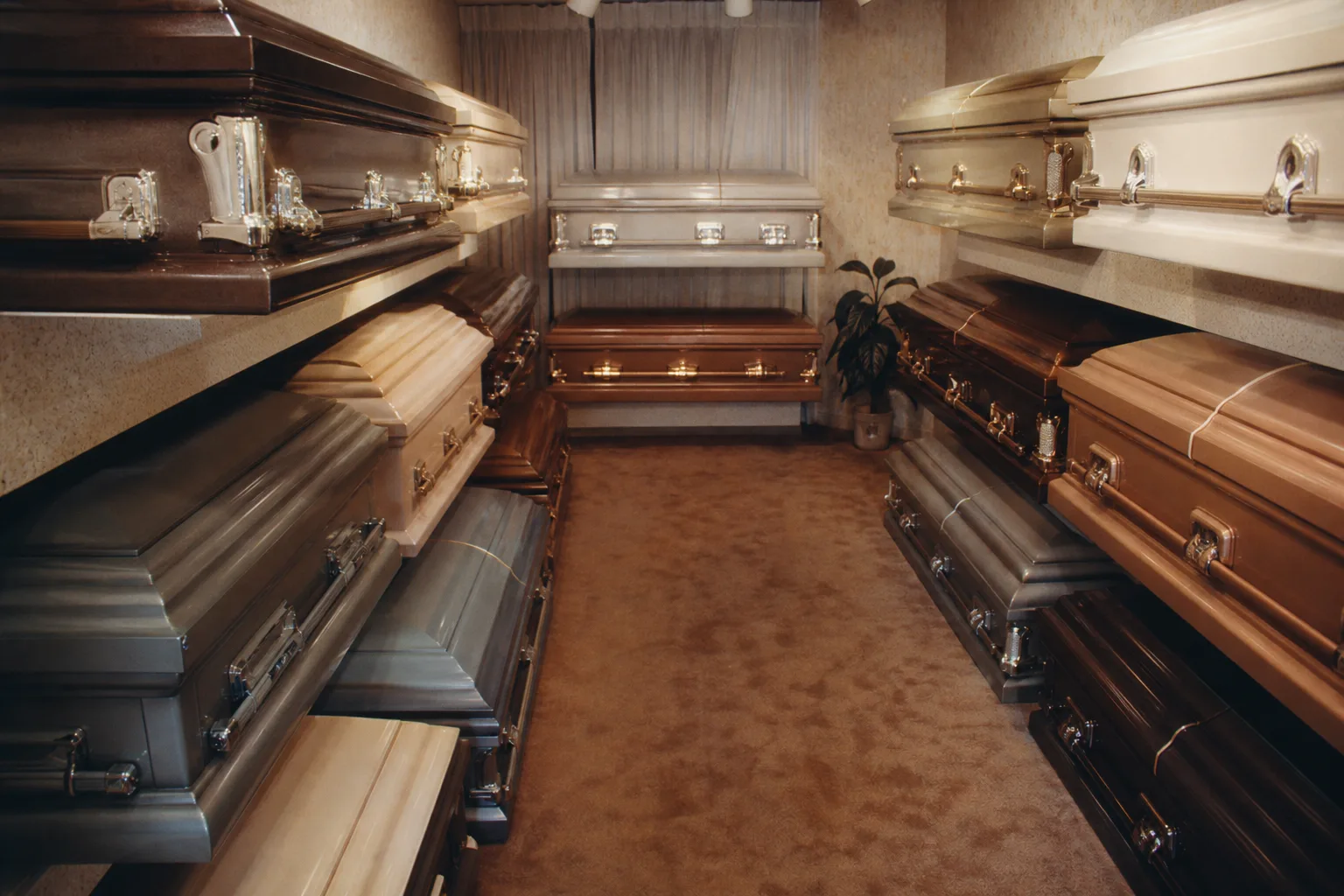
Selection rooms usually place mid and upper price points at eye level near the door. Entry-level containers tend to appear at the end of a row, in a corner, or as a fabric swatch rather than a full unit.
Lower gauge numbers mean thicker steel, so eighteen-gauge is heavier and costs more than twenty-gauge. The difference is measurable in the metal, not in anything the ground does afterward.
A funeral home cannot charge you extra for accepting a casket you bought somewhere else, and it cannot require you to be present for the delivery. It also cannot refuse the container outright.
On most general price lists, the casket line carries the widest spread of any single item on the page, and it is the line families spend the most time on. A cloth-covered minimum container and a polished bronze one sit in the same showroom, twenty feet apart, and the difference between them can exceed everything else on the bill combined. That spread is real, but it is also narrower in practice than the showroom suggests, because a large share of the total is fixed before anyone walks into the selection room. Knowing which parts move and which do not is the whole exercise.
The showroom, and what the display is doing
The first way to obtain a burial container is the one built into the appointment: choose from what the funeral home stocks or can order. Selection rooms are arranged deliberately, with mid and upper price points at eye level near the entrance and the least expensive units placed at the end of a row, propped on a stand, or represented only by a fabric swatch and a corner sample. A funeral home is required to give you a printed casket price list before it shows you anything, and that list will include units not physically on display. Ask for it, read it sitting down, and ask which of the listed models can be delivered by the service date.
Prices in a showroom generally run from a few hundred dollars for a cloth-covered particleboard or fiberboard container up through the low thousands for twenty-gauge steel, then higher for eighteen-gauge, stainless, solid hardwood, and bronze or copper. The jump from the bottom of the list to the middle is usually larger in percentage terms than the jump from the middle to the top. Delivery is immediate, the fit with the vault or grave liner is already known, and nobody has to coordinate a freight appointment during a week when coordination is hard.
A third-party retailer, shipped to the funeral home
The second way is to buy elsewhere and have the container delivered. Online sellers, casket stores, warehouse clubs and some monasteries and woodshops sell directly to the public, and the funeral home must accept what arrives without charging a handling fee for the privilege. Caskets bought this way typically ship by freight on a next-day or two-day schedule, arrive crated, and need somebody on site to receive them, which is why the delivery window matters more than the sticker price when the service is three days out. Pricing tends to land below comparable showroom models on the same gauge and species, though the gap varies by market. Confirm the interior dimensions, the shipping cutoff, and who signs for it.
The minimum container, and direct burial
The third way is to decline the traditional casket entirely. For direct burial, an unfinished wood box, a cloth-covered container, or a rigid fiberboard alternative is enough, and cemeteries that require an outer burial container will accept a plain sectional concrete liner underneath it. This is the least expensive path by a wide margin, and it is a legitimate choice rather than a fallback: the body is buried in the same ground, in the same plot, under the same marker. Families who want a viewing sometimes rent a ceremonial casket with a removable insert, which keeps the appearance of a traditional service without the purchase.
The part of the bill that does not move
Underneath all three choices sits a set of charges that behave the same regardless. The nondeclinable basic services fee, which covers the funeral director's time, staff availability, planning, permits, and the handling of paperwork, is charged on nearly every arrangement. Transfer of remains from the place of death, refrigeration or sheltering, embalming when a family elects it, use of facilities and staff for a viewing or a chapel service, a hearse and a lead car, and printed materials are all priced separately and none of them care what the container costs. Cash advance items, meaning honoraria, obituary placement, certified copies of the death certificate, and flowers, pass through at whatever the third party charges.
Cemetery costs are a second fixed block, billed by the cemetery rather than the funeral home. Grave space, the opening and closing fee, perpetual care, the outer burial container if the cemetery requires one, and the marker or monument with its setting fee together often rival or exceed the casket. None of that shifts with the selection room decision. The Federal Trade Commission oversees the disclosure rules that make this itemization visible, which is why a general price list separates these charges instead of quoting one number, and why you are entitled to buy only the items you want.
Doing the arithmetic before the appointment
The useful move is to price the fixed block first. Add the basic services fee, transfer, any preparation and ceremony charges you actually want, the hearse, the death certificates, and the full cemetery quote, and write that subtotal down. Whatever number you are comfortable with overall, subtract the subtotal, and the remainder is the honest casket budget. Families who do this arrive at the selection room with a figure rather than a feeling, and the conversation gets shorter and calmer. It also makes clear when a less expensive container frees up money for something the family will see again, such as the marker.
Two funeral homes four miles apart can differ substantially on the fixed block alone, so the same casket decision produces different totals depending on where the arrangement is made. Price lists are available by phone and in person, and comparing two or three before choosing is ordinary practice.